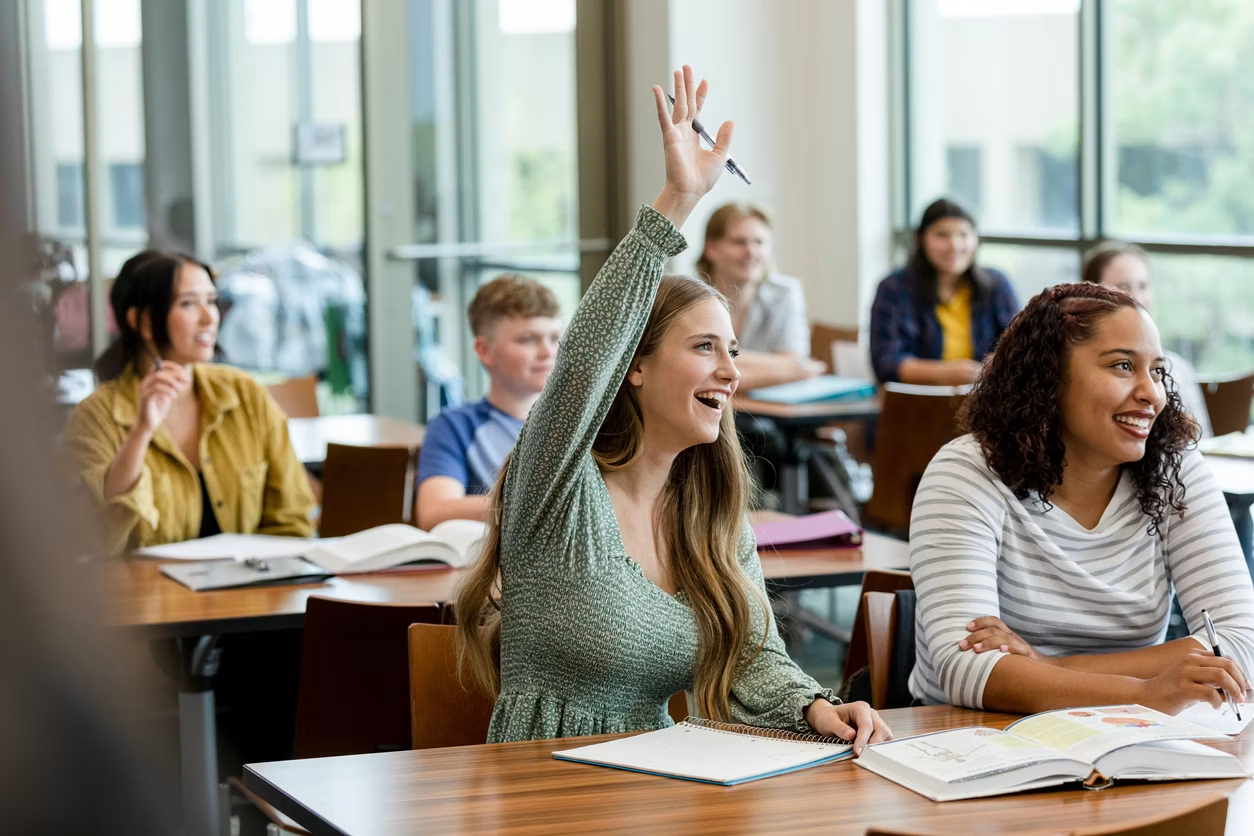
Education is one of the most important foundations of personal growth, career development, and a healthy society. It gives people the knowledge, skills, confidence, and critical-thinking abilities they need to understand the world and make informed decisions.
Today, education is no longer limited to traditional classrooms. Students can learn through schools, colleges, universities, vocational programs, online courses, professional training, educational technology, and independent study.
According to UNESCO, education is a fundamental human right and a lifelong process that helps people develop knowledge, skills, and values.
Whether you are a student, parent, teacher, professional, or lifelong learner, understanding how education works can help you make better decisions about learning and your future.
This complete guide covers the types of education, benefits of learning, higher education, online education, study strategies, scholarships, career planning, technology in education, and lifelong learning.
What Is Education?
Education is the process of acquiring knowledge, skills, values, and understanding through learning and experience.
It can take place in formal environments such as schools and universities, but learning also happens through workplaces, communities, libraries, online platforms, books, training programs, and everyday experiences.
Education can help learners:
- Build knowledge
- Develop critical-thinking skills
- Improve communication
- Solve problems
- Develop professional skills
- Become independent learners
- Prepare for careers
- Understand different perspectives
- Participate more effectively in society
Education should therefore be viewed as more than simply earning certificates or degrees. It is a continuous process of developing the ability to learn and apply knowledge.
For a deeper introduction, see our guide to What Is Education?.
Why Is Education Important?
Education affects individuals, families, communities, and economies.
UNESCO describes education as a powerful tool for developing knowledge, skills, confidence, and participation in society. It also connects quality education with broader goals such as social inclusion and sustainable development.
1. Education Builds Knowledge
Education introduces learners to subjects such as mathematics, science, languages, history, technology, economics, arts, and social sciences.
This knowledge creates a foundation for further study and professional development.
2. Education Develops Critical Thinking
A strong education encourages students to ask questions, evaluate evidence, compare ideas, and reach logical conclusions.
Critical thinking is useful both inside and outside the classroom.
3. Education Supports Career Development
Many professions require specific qualifications, degrees, certifications, or technical training.
Education can therefore provide pathways toward different career opportunities.
Read our detailed guide on Education and Career Planning to learn how academic choices can connect with future career goals.
4. Education Encourages Personal Growth
Learning can improve confidence, creativity, communication, discipline, and independence.
These skills can remain valuable long after formal education has ended.
5. Education Benefits Society
Education can help individuals contribute to their communities through professional work, entrepreneurship, research, innovation, public service, and other activities.
Types of Education
Education takes many forms. The right pathway depends on a learner’s age, goals, interests, financial situation, and career plans.
Explore our complete Types of Education Guide for a detailed comparison.
Early Childhood Education
Early childhood education focuses on children’s development during the early years of life.
Learning at this stage may involve:
- Language development
- Basic mathematics
- Social interaction
- Creativity
- Physical development
- Communication
- Emotional development
These early experiences can establish important foundations for future learning.
Primary Education
Primary education introduces children to fundamental academic skills.
Common subjects include:
- Reading and writing
- Mathematics
- Science
- Social studies
- Languages
- Arts
- Physical education
Strong basic skills can make later academic learning easier.
Secondary Education
Secondary education builds on primary education and generally introduces more advanced subjects.
Students may also begin making decisions about future education, vocational training, or employment.
At this stage, students can benefit from developing effective study habits and learning how to manage academic responsibilities.
Our guide to Study Tips for Students covers practical techniques for improving learning and study organization.
Higher Education
Higher education includes colleges, universities, and other institutions that provide advanced academic or professional education.
Students may pursue:
- Associate degrees
- Bachelor’s degrees
- Master’s degrees
- Doctoral degrees
- Professional qualifications
- Certificates
- Specialized training
Choosing a higher-education program requires careful consideration of the curriculum, costs, admission requirements, location, student support, and career outcomes.
See our Complete Guide to Higher Education for more information.
Vocational and Technical Education
University is not the only path toward a successful career.
Vocational and technical education focuses on practical knowledge and job-specific skills.
Examples include:
- Information technology
- Healthcare
- Construction
- Automotive technology
- Electrical work
- Hospitality
- Manufacturing
- Design
For learners who prefer practical training, vocational education can be an attractive option.
Traditional Education vs. Online Education
Technology has significantly expanded the ways people can learn.
Traditional education usually involves attending a physical school, college, or university. Online education allows learners to access lessons, assignments, instructors, and resources through digital platforms.
Traditional Education
Potential advantages include:
- Face-to-face interaction
- Classroom discussions
- Structured schedules
- Campus facilities
- Direct access to teachers
- Social interaction
Online Education
Online learning can provide:
- Flexible schedules
- Remote access
- Self-paced study
- A wider range of courses
- Convenient access for working students
- Opportunities to learn from different locations
Neither approach is automatically better for everyone.
The right choice depends on the learner’s goals, preferred learning style, schedule, budget, technology access, and available programs.
Read our detailed Online Education Guide to explore the advantages and challenges of digital learning.
How to Choose the Right Educational Program
Choosing a school, college, university, course, or training program is an important decision.
Before enrolling, consider the following factors.
Define Your Educational Goal
Start by identifying what you want to achieve.
For example, you may want to:
- Earn a degree
- Learn a professional skill
- Change careers
- Improve academic performance
- Prepare for a specific profession
- Explore a personal interest
A clear goal makes it easier to compare educational programs.
Research the Curriculum
Look beyond the program title.
Review the actual subjects, modules, practical experiences, assessments, and skills included in the curriculum.
A program should provide knowledge that is relevant to your goals.
Consider the Cost
Education can involve more than tuition.
Students may also need to budget for:
- Books
- Equipment
- Transportation
- Accommodation
- Internet access
- Software
- Examination fees
Creating a realistic education budget can prevent financial difficulties later.
Check Admission Requirements
Different institutions have different requirements.
These may include academic qualifications, entrance tests, language requirements, portfolios, interviews, or other documents.
Always check official admission information before applying.
Evaluate Student Support
Academic support can have a major effect on the student experience.
Look for resources such as:
- Tutoring
- Academic advising
- Libraries
- Career services
- Writing support
- Technology support
- Accessibility services
How to Study Effectively
Academic success is not simply about studying for long hours.
Effective learning depends on using appropriate strategies consistently.
For a practical breakdown, visit our Study Techniques Guide.
Create a Study Schedule
A realistic schedule can help students divide large assignments into smaller tasks.
Instead of waiting until an examination is approaching, spread learning and revision over time.
Use Active Learning
Active learning encourages students to work with information rather than simply reading it.
Useful techniques include:
- Practice questions
- Flashcards
- Self-testing
- Summarizing
- Teaching a concept to another person
- Solving problems
- Creating diagrams
- Making concept maps
Take Effective Notes
Good notes should focus on important concepts rather than attempting to record every word.
Students can experiment with outlines, mind maps, digital notes, or structured note-taking systems.
Reduce Distractions
Phones, notifications, social media, and multitasking can interfere with concentration.
A quiet study environment and dedicated study periods can make learning more productive.
Ask for Help
Students should ask teachers, tutors, classmates, or academic advisors for help when they do not understand a topic.
Asking questions is part of effective learning, not a sign of failure.
The Role of Technology in Education
Technology has changed how students access information and communicate with teachers and classmates.
Digital tools can help learners:
- Research information
- Attend online classes
- Access digital libraries
- Collaborate on projects
- Create presentations
- Organize notes
- Practice skills
- Communicate with instructors
Technology can also create new challenges, including distractions, misinformation, privacy concerns, and unequal access to digital resources.
For this reason, students need both technical skills and the ability to evaluate information critically.
AI in Education
Artificial intelligence is becoming an increasingly important topic in education.
AI tools can potentially support learning by helping students:
- Generate study questions
- Explain difficult concepts
- Organize ideas
- Practice writing
- Explore different perspectives
- Create personalized learning activities
However, AI should be used responsibly.
Students should follow their school’s academic-integrity rules and avoid submitting AI-generated work as their own when that is prohibited.
AI should support genuine learning rather than replace understanding.
UNESCO also identifies digital learning and AI in education as important areas in the future of education.
Read our upcoming guide to AI in Education for a deeper discussion.
Scholarships and Financial Aid
The cost of education can be a significant concern for students and families.
Financial assistance can make education more accessible.
Common forms of assistance include:
Scholarships
Scholarships may be awarded based on academic achievement, financial need, leadership, talent, community involvement, or other criteria.
Grants
Grants can provide financial support under specific eligibility conditions and may not normally require repayment.
Student Loans
Student loans provide funds for education but generally need to be repaid, often with interest.
Student Employment
Some students help finance their education through part-time employment or institution-supported work opportunities.
Students should research eligibility requirements carefully and apply before deadlines.
For more information, visit our Scholarships and Financial Aid Guide.
Education and Career Planning
Education and career planning can work together.
Before choosing a degree or training program, students can research possible careers and ask:
- What qualifications are required?
- What skills do employers value?
- What subjects are relevant?
- Is practical experience important?
- Are professional certifications required?
- What opportunities exist after graduation?
However, career paths are not always linear.
Students may change industries, learn new skills, or discover new interests over time.
This is one reason transferable skills such as communication, problem solving, adaptability, and critical thinking are so valuable.
The OECD highlights the importance of helping students develop the knowledge, skills, attitudes, and values needed for a changing future.
Important Skills for Student Success
Academic knowledge is important, but students also need skills that can be applied in different situations.
Communication
Clear communication helps students explain ideas, participate in discussions, write effectively, and work with others.
Critical Thinking
Critical thinking allows learners to evaluate information, recognize weak arguments, and make informed decisions.
Problem Solving
Students should learn how to identify problems, consider alternatives, and develop practical solutions.
Digital Literacy
Understanding digital tools and evaluating online information are increasingly important parts of modern education.
Collaboration
Many academic and professional projects require people to work together.
Adaptability
Technology and workplaces change quickly. Students who can learn new skills and adapt to new situations may be better prepared for these changes.
Time Management
Managing deadlines, assignments, studying, and personal responsibilities is an important part of student success.
How Parents Can Support Students
Parents and guardians can play an important role in education without taking responsibility for every assignment.
They can support students by:
- Creating a positive learning environment
- Encouraging healthy routines
- Discussing academic goals
- Helping develop time-management skills
- Communicating with teachers when necessary
- Encouraging curiosity
- Celebrating progress
- Encouraging independence
Students also need opportunities to solve problems and take responsibility for their own learning.
The Role of Teachers in Education
Teachers influence how students experience learning.
Effective teaching can include:
- Clear explanations
- Meaningful questions
- Practical examples
- Student participation
- Constructive feedback
- Different learning activities
- Appropriate technology
- Opportunities to apply knowledge
A strong learning environment gives students opportunities to think, practice, discuss, create, and solve problems.
The OECD identifies teachers and educators as a key part of effective learning environments.
Common Challenges in Education
Students can face many barriers during their educational journey.
These may include:
- Financial difficulties
- Limited academic support
- Poor time management
- Stress
- Difficulty understanding subjects
- Limited access to technology
- Language barriers
- Lack of motivation
- Unclear career goals
The solution will depend on the specific problem.
Students can seek support from teachers, academic advisors, counselors, libraries, tutors, family members, and other available educational resources.
Lifelong Learning: Education Beyond School
Education does not have to end after graduation.
Lifelong learning means continuing to develop knowledge and skills throughout life.
People can learn through:
- Professional courses
- Online classes
- Certifications
- Workshops
- Books
- Conferences
- Mentoring
- Personal projects
- Independent study
- Workplace training
UNESCO describes lifelong learning as learning that extends across the entire lifespan and includes formal, non-formal, and informal learning.
This makes lifelong learning particularly important in a world where technology, workplaces, and skill requirements continue to change.
Read our complete Lifelong Learning Guide to learn how to continue developing skills beyond formal education.
How to Make Education More Effective
An effective educational journey combines knowledge, practice, reflection, and real-world application.
Students can improve their learning by:
- Setting specific goals
- Creating a realistic study schedule
- Practicing regularly
- Reviewing difficult concepts
- Asking questions
- Using reliable educational resources
- Learning from mistakes
- Developing communication skills
- Improving time management
- Continuing to learn beyond the classroom
The goal should not simply be to memorize information for an examination.
The goal is to understand knowledge and develop the ability to use it.
Frequently Asked Questions About Education
What is education?
Education is the process of developing knowledge, skills, values, understanding, and abilities through formal and informal learning.
Why is education important?
Education can help people develop knowledge, critical-thinking abilities, professional skills, confidence, and opportunities for personal and career development.
What are the main types of education?
Major types include early childhood education, primary education, secondary education, higher education, vocational education, technical education, online education, and lifelong learning.
Is online education effective?
Online education can be effective when students have access to quality learning materials, appropriate technology, support, motivation, and good time-management skills.
Is university necessary for every career?
No. Some careers require university qualifications, while others can be entered through vocational education, apprenticeships, certifications, portfolios, or practical experience.
How can students improve their academic performance?
Students can improve by developing consistent study habits, using active-learning techniques, managing time effectively, asking for help, practicing regularly, and reviewing mistakes.
What skills are important for students?
Communication, critical thinking, problem solving, collaboration, digital literacy, adaptability, and time management are valuable skills for students.
What is lifelong learning?
Lifelong learning is the continued development of knowledge and skills throughout a person’s life through formal, non-formal, and informal learning opportunities.
Final Thoughts
Education is a lifelong journey rather than a single stage of life.
Whether you are a school student, university applicant, college student, teacher, parent, professional, or lifelong learner, the goal should not simply be to collect qualifications.
The deeper goal is to develop knowledge, skills, curiosity, confidence, and the ability to continue learning.
Modern education includes far more than traditional classrooms. Students can learn through schools, universities, vocational programs, online courses, technology, professional training, and independent study.
As education continues to evolve, learners who develop strong foundational knowledge together with critical thinking, communication, digital literacy, adaptability, and a commitment to lifelong learning will be better prepared for future opportunities.
Explore the Education section on Williams.edu.pl for more guides covering study strategies, higher education, scholarships, online learning, career planning, and student success.